Mahjong-Solitaire Game Rules, Tools, and Winning Strategies Explained
Mahjong-Solitaire comes in two main versions: the classic Asian Mahjong-Solitaire for four players and Mahjong-Solitaire Solitaire, a single-player variant popular in Western countries. The latter is the version you can enjoy online at Mahjong-Solitaire-Game.com.
Acessar Mahjong-Solitaire
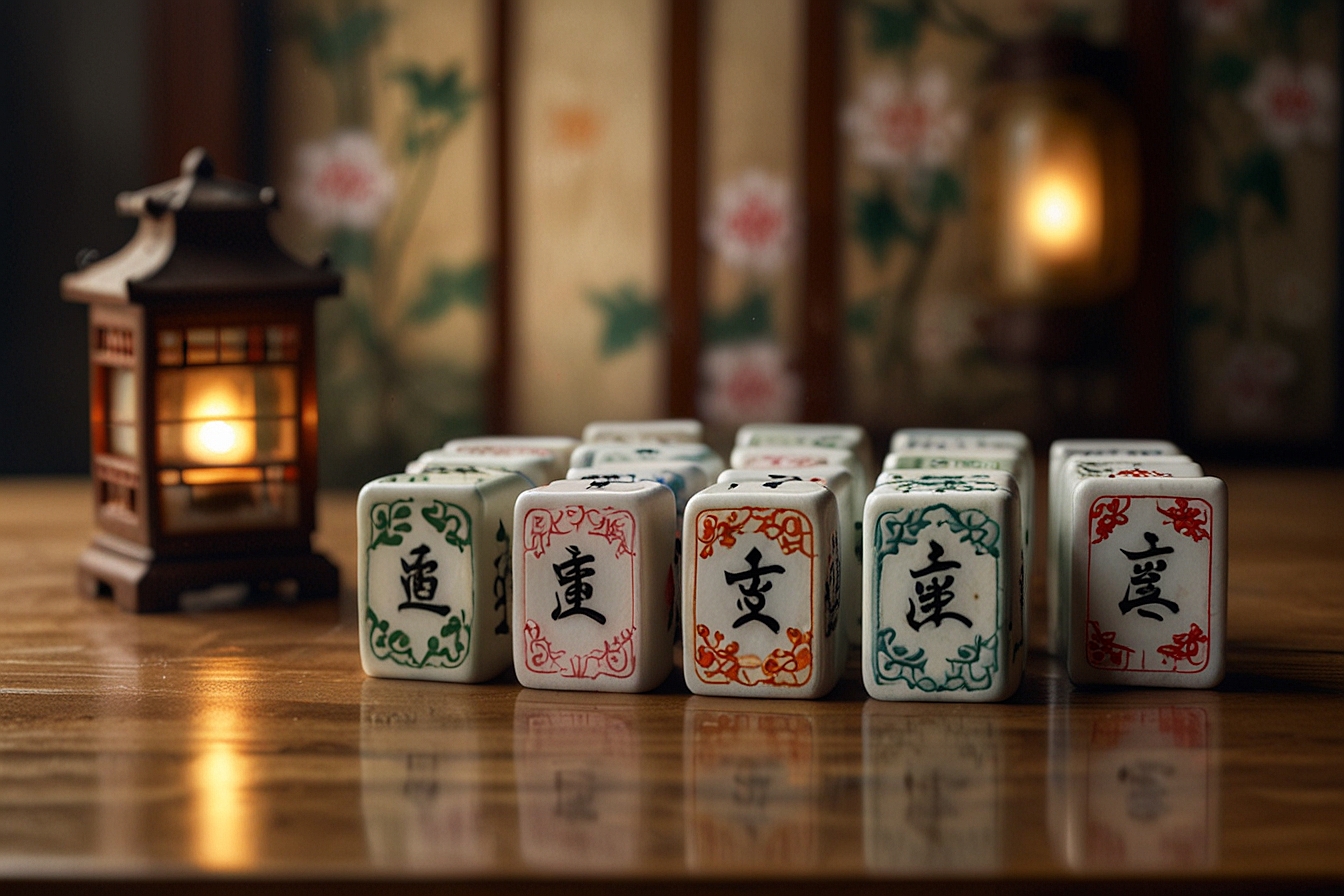
At the beginning of a game, the Mahjong-Solitaire Solitaire board features 144 tiles stacked in layers, forming a pyramid-like shape. Each tile has unique symbols or images, with every design appearing four times. The goal is to match identical tiles and remove them from the board. However, two special series—the flowers and seasons—each contain four unique tiles that can only be paired with others within the same series, such as spring with summer or autumn with winter.
According to official Mahjong-Solitaire rules, you can only remove tiles that meet specific conditions:
- A tile can be selected only if no other tile is placed on top of it.
- A tile cannot be selected if tiles block it on both sides.
- You may only remove tiles that are free on at least one side.
In the example above, the green line 1 shows two tiles that are both free on one side, making them removable. Likewise, tiles along line 2 are also eligible for elimination.
However, the red lines tell a different story. In line 3, one tile is free while the other is blocked by two tiles, preventing removal. You’ll need to clear the blocking tiles first. In line 4, one tile is covered from above, meaning it cannot be removed even though it’s free on one side.
Continue matching and clearing tiles until the board is empty. The game gets easier as fewer tiles remain. Occasionally, no available pairs can be matched—this happens when tiles are stacked directly on top of their matches. In such cases, the game automatically shuffles the tiles so you can keep playing. To assist you, several helpful tools are available:
Game Tools
- Mix: Randomly shuffles all remaining tiles to open up new pairing opportunities.
- Hint: Highlights an available pair if you’re stuck. Note that this suggestion may not always be the most strategic move.
- Undo: Lets you reverse your last move, ideal for correcting mistakes or testing potential outcomes.
Mahjong-Solitaire Tips and Winning Strategies
While some think Mahjong-Solitaire relies solely on luck, using the right strategy can significantly improve your results. Each Mahjong-Solitaire puzzle has at least one solution, meaning every game is winnable. Here are a few expert strategies to enhance your gameplay:
1. Look Ahead: Examine the entire board before making your first move. Identify all potential pairs and plan several steps ahead. Prioritize removing tiles that block multiple others—like the top tile in the pyramid, which usually covers four tiles at once. You can also use the Undo tool to experiment with moves safely.
2. Manage Triples: When three identical tiles are free, choose wisely. For example, if tiles A, B, and C all feature the same design, determine which pair frees the most space. If tile C doesn’t block others, pairing A and B is often the best move.
3. Clear Upper Layers First: Mahjong-Solitaire boards often have five stacked layers. Since covered tiles can’t be selected, focus on clearing upper layers early to expose new tiles and create more pairing options.